
Stewards of a Fallen Eden
Climate change is a complex issue, but our path forward as Christians may not be as complicated as you think

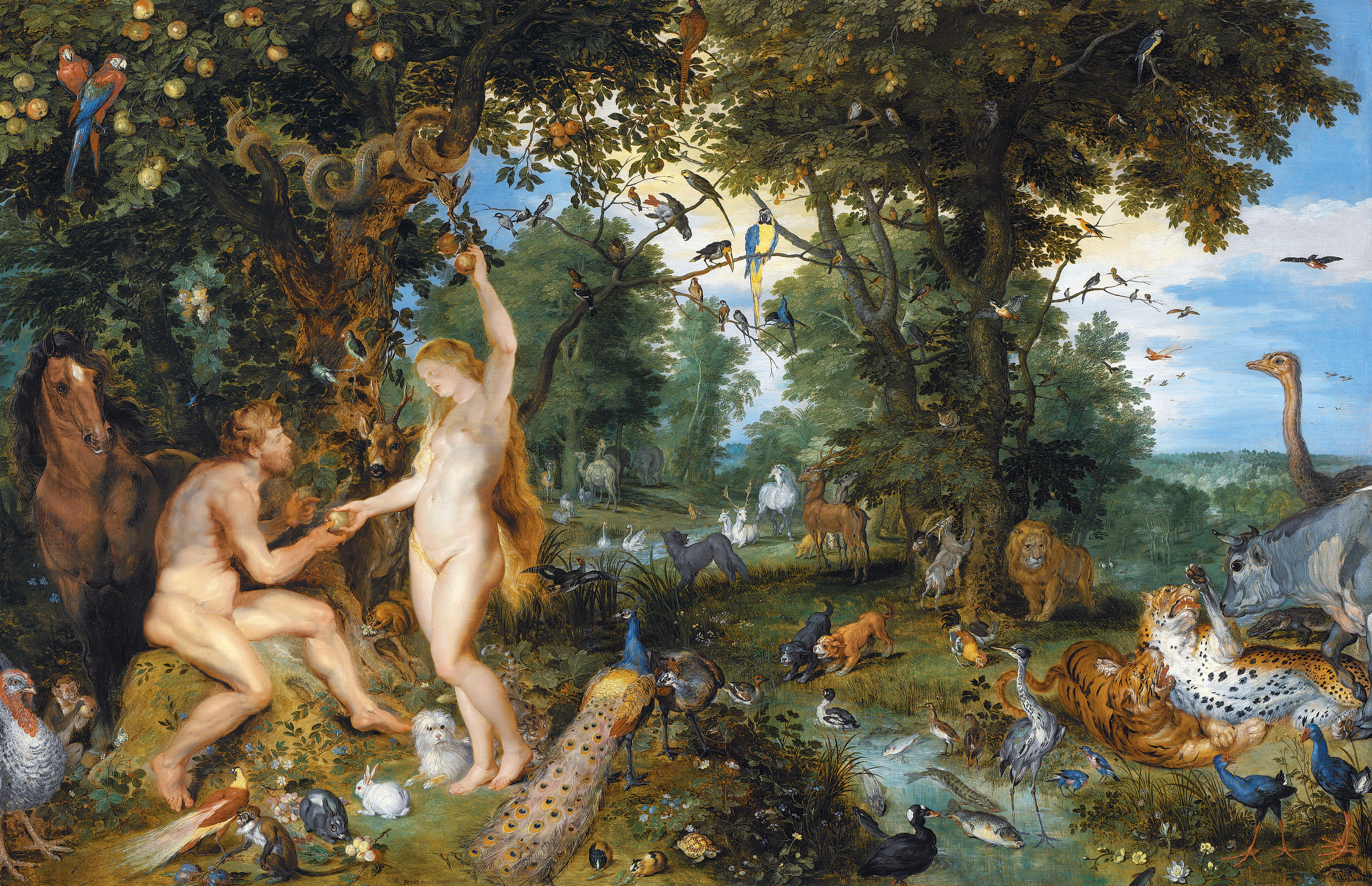
Source: The Garden of Eden with the Fall of Man - Peter Paul Rubens & Jan Brueghel the Elder (1615)
The Climate
This past Sunday, we had a guest speaker at our church: Dr. Carmen Imes of Biola University. Dr. Imes gave a compelling sermon on what it means to be the “image of God.” It was an enlightening morning, to say the least.
About halfway through the message, Dr. Imes commented lightheartedly about churches using paper cups instead of styrofoam cups. Her remark made it seem as though paper cups are environmentally superior to styrofoam cups. It got me thinking, is that true? If it is indeed true, should that be something we consider on a daily basis? What other small but important details might we consider abiding by concerning environmental sustainability?
Talking about the climate is a real jumble of opinions, scientific interpretation, and politics. I think the reality at this point is that there are probably very few people in the world who can objectively understand even a small percentage of the minutae needed to adequately make policy decisions regarding climate and the environment. Let me give you an example of what I mean.
I worked for Sempra Energy and its subsidiary, San Diego Gas & Electric, for 6 years. When I first started, Sempra owned wind assets, the large wind turbines you see scattered across the desert landscape east of San Diego and Los Angeles. They even owned a small wind farm in Hawaii. Anyways, Sempra ended up selling their wind assets. Why? Because they were bad financial investments, relatively ineffective power generators, and they killed thousands of birds. Yes, wind turbines decimate birds of all sorts. This may not be a popular bit of information, but it is the truth.
Or what about the sun and its natural cycles? The sun is a cyclical entity, with 11-year solar cycles and a paramount effect on everything from climate to radio communications. Evidence suggests that the sun is one of the chief factors behind Earth’s natural climatic changes, as put forward by the US government and countless scientific studies.
That said, how many other climate-related talking points are double-edged swords? Wind turbines produce power via the infinite and ever-present wind. That would seem like a very green initiative. However, it takes tremendous amounts of fossil fuels to construct and install wind turbines, on top of the other drawbacks that I’ve mentioned.
My point is that climate change is a complicated, multi-variate issue, and it’s very hard to determine how to correctly analyze climate initiatives. Are wind turbines worth the loss of birds? Are the fossil fuels used to build renewable energy generators offset by the asset during its useful life? These are the kinds of questions that are nearly impossible for anyone to answer.
Look, I’m neither a climate expert nor a climate change denier, and I cannot articulate an authoritative opinion on the climate holistically. However, I hold the opinion that our personal decisions do, in fact, impact the climate. We can either damage or nurture this wonderful planet we have been gifted. I don’t know to what magnitude our species is impacting the global climate, but I am here to say that I think we should care more about our individual actions than the actions of others. The most basic form of Christian stewardship found in Genesis is stewardship of nature. Let’s take a look at what happened, “In the beginning…” and how your choices can change the world for the better.
Eden
I get the sense that people generally seem to think that large climate efforts by governments and large corporations will have the most profound impacts on minimizing mankind’s climatic consequences. However, the logical misstep in this kind of thinking is that governments and corporations are made up of individual people. The reality is that individual people collectively make decisions that are objectified as governments and large companies. The fundamental building block of these decisions is still individual people. If we, as Christian individuals, go about our days with the climate in mind, we can positively impact the climate in ways that we otherwise wouldn’t be able to.
You can think of this process kind of like a neural network, pictured below. Imagine that the leftmost column of blue dots represents 5 people providing their opinions to their 5 bosses, represented by the white lines and second column of blue dots, respectively. Then, imagine that the second column of bosses lends their opinions to their bosses, the third column of 5 individuals. Finally, the 5 big bosses must make their final policy decision that is the summation of all discussion and research done by each consecutive group of people. The result is an output, a collective decision that is the sum of individual inputs.
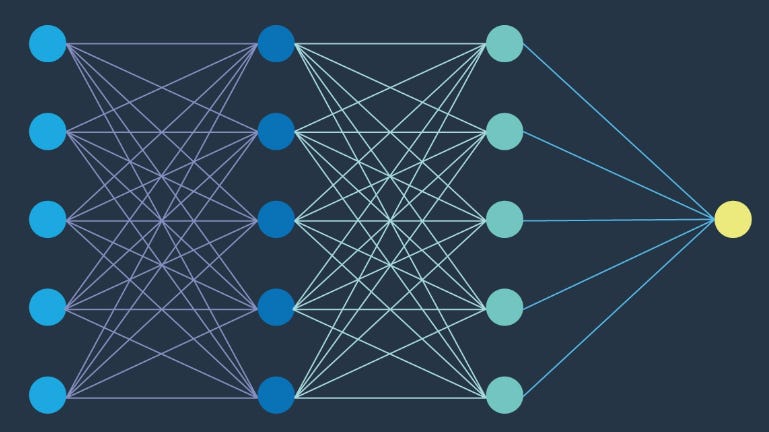
We, individual people, have the power to enact our influence in this manner. In regard to the climate, our individual decisions, when considered collectively, have sizable results.
When God created Adam, we see in Genesis 2: 15-17 Adam’s duty and stewardship over Eden:
“The LORD God took the man and put him in the Garden of Eden to work it and take care of it. And the LORD God commanded the man, "You are free to eat from any tree in the garden; but you must not eat from the tree of the knowledge of good and evil, for when you eat from it you will certainly die."
Adam’s job is to work and take care of the garden. He is entrusted to steward the garden in such a manner that he can also use its resources for himself, with some established limits. What this shows is that Adam did wield great power over his environment, as we do today. His job is to nurture the garden of Eden and not to abuse his dominion.
We see further in Genesis 2: 19-20 Adam naming flora and fauna, an important part of his stewardship:
“Now the LORD God had formed out of the ground all the wild animals and all the birds in the sky. He brought them to the man to see what he would name them; and whatever the man called each living creature, that was its name. So the man gave names to all the livestock, the birds in the sky and all the wild animals.”
Finally, God, who is aware that Adam cannot steward the garden alone, is given a helper in Genesis 2: [20] 21-22:
“But for Adam no suitable helper was found. So the LORD God caused the man to fall into a deep sleep; and while he was sleeping, he took one of the man’s ribs and then closed up the place with flesh. Then the LORD God made a woman from the rib he had taken out of the man, and he brought her to the man.”
God knows that we can’t change the Earth’s environment single-handedly. Only with our individual efforts harnessed in a collective nature can we truly care for this Eden we have been bestowed.
Of course, the story doesn’t stop there, and we know that individual decisions made by Adam and Eve would lead to the collective fall of mankind. The point is reinforced by this fact: once more, our individual choices have consequences.
The crux of human climatic impact, and really all sin, can be summarized by the most famous quote of the late Russian author Aleksandr Solzhenitsyn.
“The line separating good and evil passes not through states, nor between classes, nor between political parties either -- but right through every human heart -- and through all human hearts. This line shifts. Inside us, it oscillates with the years. And even within hearts overwhelmed by evil, one small bridgehead of good is retained.”
Our First Job
Source: ‘Pale Blue Dot’ - Voyager 1 Space Probe - NASA/BBC News - a picture of Earth from 6 billion kilometers away
Like Adam and Eve before us, the first job given to people was to steward the garden. We have one, indispensable home, a blue orb 7,926 miles in diameter. There is no doubt that the climate of our planet is dynamic. Climate change is happening, although the causes and rates of changes are hotly debated. So now the question arises: How can you impact our complex and physically large climate?
You can do exactly what Adam and Eve did. Make choices that honor God while tending the garden together.
Remember the picture of the neural network we looked at? Every decision you make affects others. We know that trash has negative environmental outcomes. Just this past week, an article came out about a team of Spanish scientists who analyzed sand at the bottom of the Calypso Deep, the deepest point of the Mediterranean Sea, 3.2 miles beneath the surface. They found that even at great depths, sand samples contained human trash. Not to mention that the ocean is home to other great abominations like the Great Pacific Garbage Patch, a giant floating island of trash estimated at 620,000 square miles of debris.
What can you do to help alleviate this problem? Don’t litter.
Think about your daily decisions and how you might choose to conscientiously steward the Earth:
Throw away your trash
Don’t injure, kill, or abuse animals (not including hunting/pest control)
When enjoying the outdoors, try to practice Leave No Trace principles
When making business or occupational decisions, factor in the environmental impact
Reduce single-use plastics by using reusable water bottles, shopping bags, and food containers
Choose energy-efficient appliances and LED light bulbs
Combine errands to reduce driving time and emissions
Repair and maintain items rather than replace them
Shop secondhand for clothing and household goods
Participate in local clean-up events (beaches, parks, neighborhoods)
This past week, as Dr. Imes continued in her Sunday sermon, she mentioned that she tries to pick up trash on her long walk to work each morning. It’s little acts of Earthly stewardship such as this that will lead to collective progress. Like Adam and Eve, we have been given an important responsibility by God to take care of His creation. Let’s not, as individuals seeking to please Him, let Him down.
Final Thoughts
I hope that your takeaway from this week isn’t a message of doom and gloom or blaming. I have not treated the environment perfectly myself. I distinctly remember sitting high on Mount Rainier’s glacial cap, eating a snack and drinking some water as I descended its snowy flanks. As I finished eating, I set down the wrapper to my energy bar, which was quickly swept up by a gust of wind and fluttered right into a massive crevasse. A few others watched this happen and remarked that the wrapper was gone forever.
The mainstream media has popularized a picture of the climate that is grim, cynical, and pessimistic. Contrary to the common opinion held by many dogmatic pundits, I would hope that instead of anxiety, we might feel a sense of eager duty. Our actions set off a sequence of events that lead toward betterment or destruction. Every second of every day, we have the chance to make decisions that either help or hinder the environment. It’s imperative that as Christians, we gladly assume our roles as stewards of Creation to serve as examples to the rest of the world how God might have us live in right order with Him.
Please consider commenting below and exploring some of our questions for reflection for this week:
What is your favorite way to enjoy nature/the outdoors?
Where is your favorite place in nature, and why?
What are common practices that you employ to steward the environment?
Be careful of worry. It’s usually a self defeating behavior. Concern/commitment suggest action.
Topical to your wind turbine discussion, there is a field of study called “life cycle analysis” that is all about quantifying the environmental impact of a product’s entire life, construction through demolition. There’s uncertainty/variability, naturally, but the impact of building renewables isn’t entirely unknowable. Making good decisions for energy and the environment (like investing in renewables) is always easier with good data. I like that we can choose action in light of reasonable concern.
Anyway, my favorite place to enjoy the outdoors is anywhere the nighttime stars are dizzyingly clear.